
RUEA Vice-President Participated in EESC Meeting in Brussels
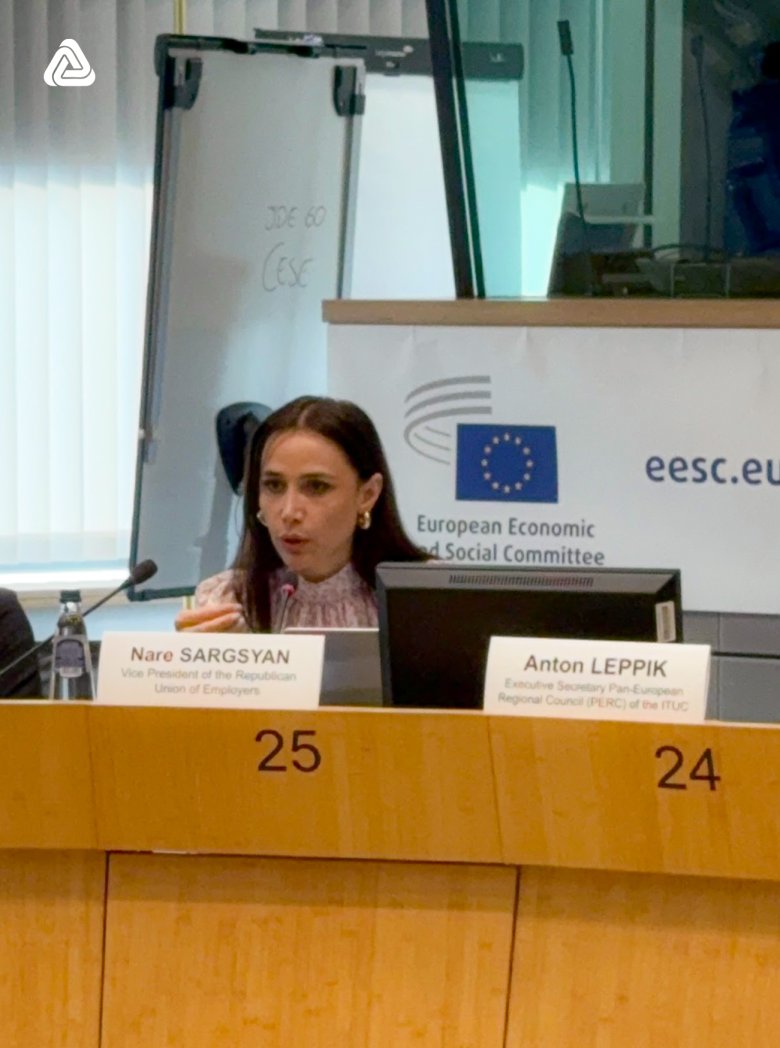
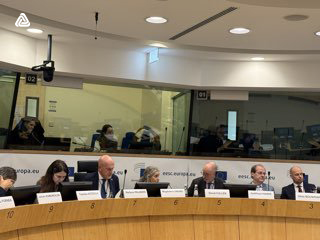
On 10 November, as part of the 9th Meeting of the EU–Armenia Civil Society Platform held in Brussels, Nare Sargsyan, Vice-President of the Republican Union of Employers of Armenia (RUEA), participated as a speaker in the European Economic and Social Committee (EESC) stakeholder meeting entitled “Regional Connectivity: Economic and Social Perspectives.”
The event was led by Magdalena Grono, European Union Special Representative for the South Caucasus and the crisis in Georgia, and Stefano Palmieri, President of the External Relations Section of the European Economic and Social Committee.
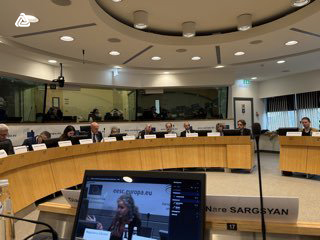
The meeting brought together employers, trade unions, civil society organisations and EU representatives from Armenia, Azerbaijan, Georgia and Türkiye to discuss the economic and social dimensions of regional connectivity.
Economic opportunities and business challenges
Representing Armenian employers, Nare Sargsyan highlighted that improved connectivity could give Armenia more diversified access to regional and European markets, shorten transport routes, strengthen supply chains and create new investment and employment opportunities.
However, infrastructure alone is not enough. Companies need confidence that routes will remain operational, border procedures will be predictable and political tensions will not interrupt trade.
Political uncertainty directly increases financing and insurance costs, delays investment and limits job creation. At the same time, the relationship works in both directions: political stability enables economic cooperation, while strong and mutually beneficial economic ties can reinforce stability by creating shared interests.
Connecting large investments with SMEs
During the discussion on SMEs and local economies, Nare Sargsyan addressed the EU’s strategic investment initiative for Armenia. While large investments are essential for modernising infrastructure and creating new economic capacity, most Armenian SMEs cannot participate in projects of this scale independently.
RUEA therefore stressed the need to connect large strategic investments with smaller businesses through local supplier mapping, accessible procurement opportunities, business consortia, support for meeting European standards and appropriate financial instruments.
The success of a major logistics, energy or digital project should be measured not only by the amount invested, but also by how many SMEs receive contracts, improve their capabilities, enter new value chains and create jobs.
From dialogue to practical cooperation
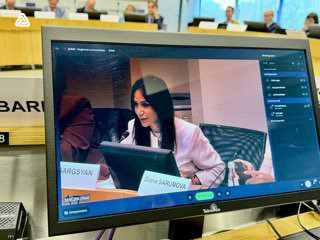
Employer organisations and business associations can help transform regional dialogue into practical cooperation by identifying companies, mapping barriers, preparing local suppliers and developing pilot projects in sectors with realistic potential for cross-border cooperation.
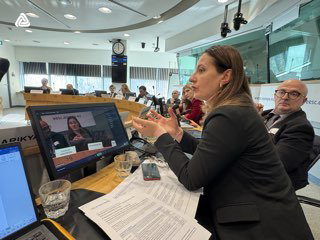
The employers’ message was clear: We need large investments, but they should become platforms through which smaller businesses can grow. Connectivity should be measured not only in infrastructure and transit volumes, but also in business confidence, local contracts, investment and decent jobs.
LATEST NEWS
-
 15-05-2021The food security system can become a cornerstone for integrating and linking various sectors of the economy and becoming an alternative model for economic development. RUEA has been working with the World Food Programme in a multiphase assessment of Armenia’s food security system. On 5 February, 2021 we had a mini-conference to discuss the pillars around which food security system of Armenia can help develop the other sectors of the economy (we estimated at least 15 such sector linkages with food security).
-
 05-10-2014The training courses, organized in the framework of ALIGN project, aimed to assist and support higher educational institutions of Armenia in the process of compliance the Educational Programs with National and Sectorial Educational requirements of Armenia. The trainings were developed in the framework of TEMPUS ARMENQA and INARM projects in accordance with the requirements of the European educational system.
-
 27-02-2020In February 2020, a conference-discussion was held on "The importance of occupational safety and health for employers" organized by RUEA with the support of the International Labor Organization.
-
 30-04-2021On 30 April 2021, three RUEA representatives attended a meeting on the progress of the “Resource Saving and Clean Production” (RSCP) component of the “EU for the Environment” program. The main purpose of the meeting was to demonstrate the possible application of RSCP practices based on food / agriculture, construction materials and chemical industry, as well as to receive suggestions on partnership opportunities with other interested organizations.